
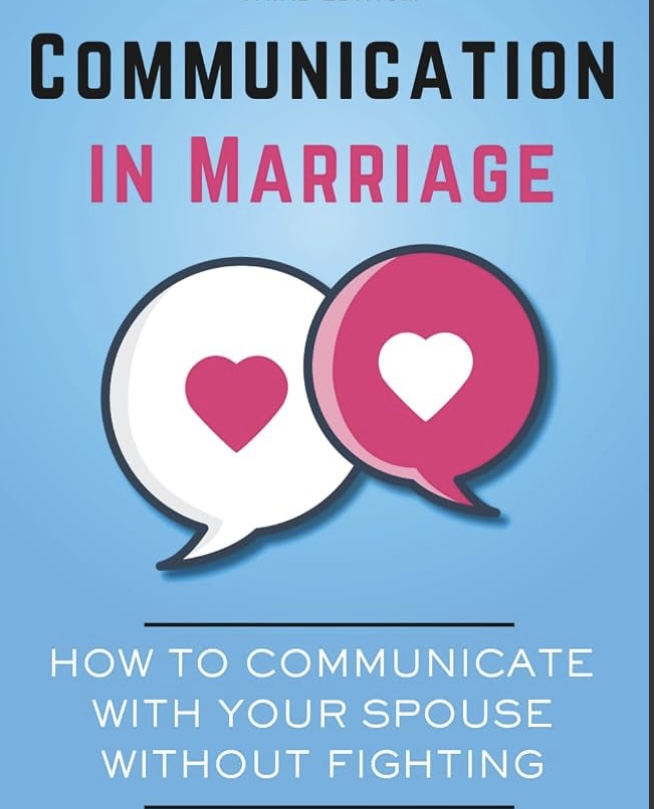
THE POWER OF WORDS
Proverbs 18:20-21 KJV – .
21 Death and life are in the power of the tongue: and they that love it shall eat the fruit thereof.
- The quality of your words contributes significantly to the quality of your marriage.
- Avoid insults, threats , name calling etc.
- Avoid using statements like always and never instead address the behavior
- Speaking truth in love. Ephesians 4:16
- Do not hide important matters.
FIVE LEVELS OF VERBAL COMMUNICATION
- clichés
- Facts
- Opinions, ideas and judgments
- Feelings and emotions
- Deep personal communication…involves sharing deep feelings, fears ,anxiety, needs, likes and dislikes.
Counsellors encourage couples not to remain in level 2 and 3 but rather extend to all levels
ELEMENTS OF EFFECTIVE COMMUNICATION
- Talking
- Listening
- Understanding
HOW TO SPEAK TO YOUR SPOUSE EFFECTIVELY
- Know yourselves, understand your emotions your strength and
- Choose the right time and place for communication
- Avoid embarrassing your spouse in front of your children friends,
- Be clear with your utterances
- Be concise but complete
- Be courteous
- Be honest, be attentive to your tone
- Body language
LISTENING IN COMMUNICATION
James 1:19
Proverbs 18:13
Listening involves
- Attention
- Interpretation
- Understanding
- Response
DIMENSIONS OF GOOD LISTENING
- Listen to the words
- Listen to the non-verbals
- Listen to the person and whole context
ATTENTION
Attention requires:
- Affection
- Reassurance
- Companionship
PRACTICAL RULES FOR ACTIVE LISTENING
- Give your spouse attention, maintain appropriate eye contact
- Do not interrupt immediately
- Do not assume
- Ask and clarify
- Reflect back what you heard and give appropriate response
- Revalidate your feelings
- Healthy silence
- Feedback
BARRIERS TO EFFECTIVE COMMUNICATION
- Different background
- Age
- Education
- Culture
- Family background
- Personality
- physical interference
- Noise
- Children interrupting
- Phone noise
- Emotional interference
- selective listening
- Premature conclusion
- Interrupting during communication
- Defensiveness
- Constant criticizing
- Excessive talking
- Lack of quality time
NON – VERBAL COMMUNICATION
Communicating without primarily, replying with words.
INSTANCES OF NON – VERBAL COMMUNICATION
- Holding hands may communicate affection.
- Smiles may communicate affection
- Avoiding eye contact may communicate discomfort.
- Walking away may communicate discomfort.
- Banging a door may communicate upset or anger.
POWER OF BODY LANGUAGE
Do not automatically interpret every gesture rather ask if there is something wrong.
WATCH THIS SPACE FOR PART 3
LESSONS FROM HHC MARRIAGE SCHOOL
BY HHC MARRIAGE COUNSELLORS
HOLY HILL CHAPEL AG, GHANA